
Bathrooms · Wardrobes · Gyms · Feature walls
Custom Mirrors
A mirror is the one fitting in a bathroom people look at every single day, from 40cm away. Which is why the edge finish and the mounting matter more than the price per square metre.
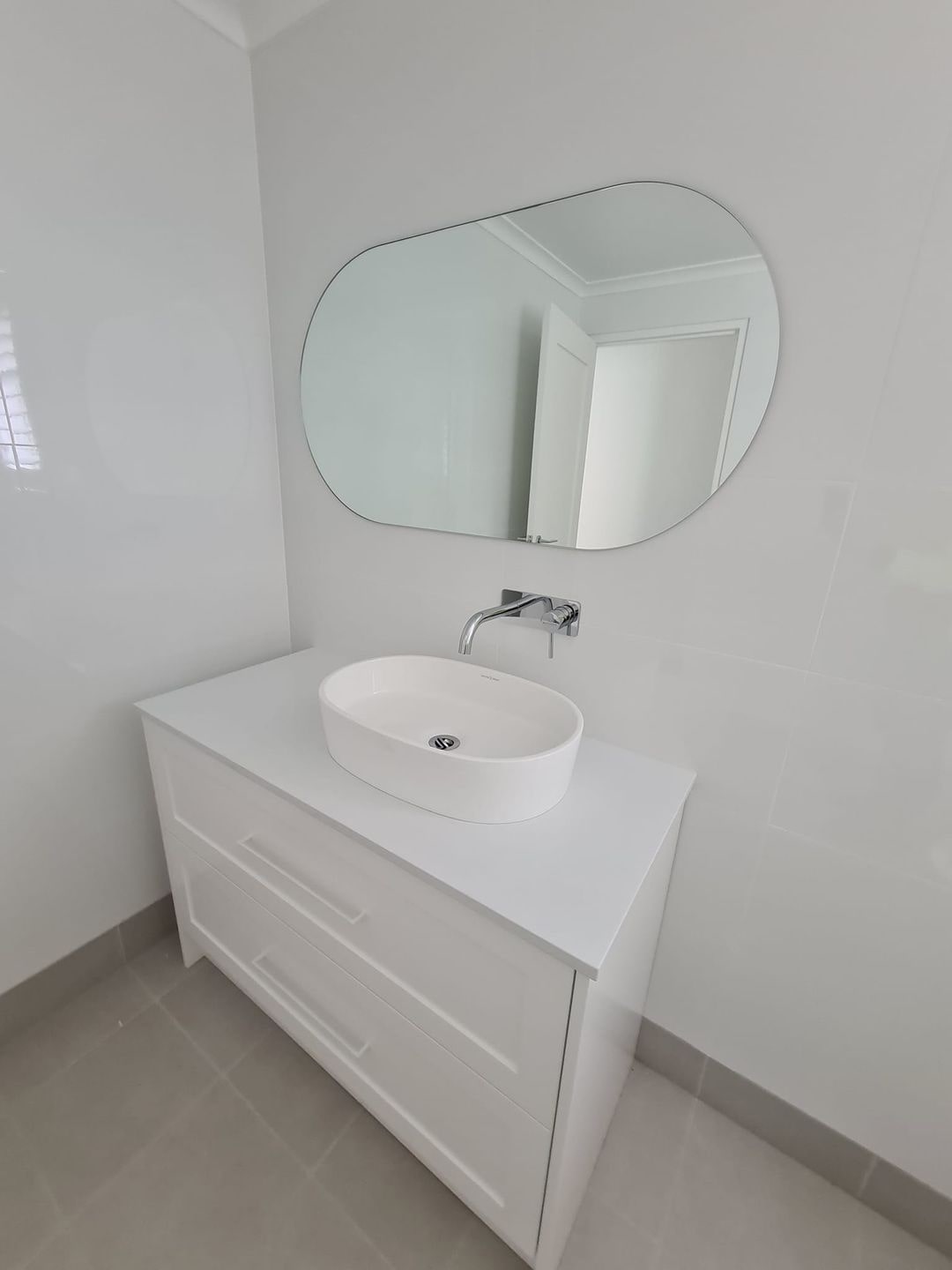
Shape, edge and fixing
Three decisions, made in this order, and each one narrows the next.
- Shape. Rectangles and squares are the fastest and cheapest. Pills, arches, ovals and circles are cut on a CNC and cost more, but they soften a room full of straight tile lines. Shaped mirrors also need their radius agreed before cutting — it cannot be adjusted on site.
- Edge. A flat polished edge is the clean contemporary default. A bevel catches light along the perimeter and suits more traditional rooms. Either way, the edge should be worked — a raw cut edge is sharp and will chip.
- Fixing. Concealed brackets or a French cleat give a floating look with nothing visible. Direct adhesive is cheaper but effectively permanent, and it needs a mirror-safe adhesive — standard silicone attacks the silver backing.
Wet areas and the extras worth having
Bathroom mirrors fail from the edges inward. The black spotting you see creeping in on an old mirror is the silver backing corroding where moisture got in.
- Copper-free silver mirror. Standard in every wet-area mirror we supply. Far more resistant to the humidity and cleaning products a bathroom throws at it.
- Demister pads. A thin heating element bonded behind the mirror, wired to the light circuit. Keeps a patch clear while the shower runs. Needs an electrician and is much easier to plan before the wall is closed up.
- LED lighting. Perimeter, backlit halo, or a frosted band across the face. Front-lit is far better for shaving and make-up than a backlit halo, which mostly looks good in photographs.
- Safety backing. A film applied to the rear so that if the mirror is ever broken, the pieces stay put. Standard on gym and full-height wardrobe mirrors.
Specification at a glance
- Glass
- 4mm, 5mm or 6mm mirror. Copper-free silver for all wet areas; 6mm for large or unsupported spans.
- Shapes
- Rectangle, square, pill, arch, oval, circle and custom CNC profiles.
- Edges
- Flat polished, bevelled (typically 20–25mm), or mitred for a shadow-line reveal.
- Options
- Demister pads, LED perimeter or backlit halo lighting, safety backing film, shelf cut-outs, power point cut-outs.
- Tints
- Clear silver, grey, bronze and antique/aged finishes.
- Fixing
- Concealed brackets, French cleat, or mirror-safe adhesive on a sound flat substrate.
Questions
Mirrors — the usual questions
Can you cut a mirror to fit around a tap or a shaving cabinet?
Yes. Cut-outs and notches are done before the mirror is delivered. We need exact positions at template stage — a mirror cannot be re-cut once the edges are polished.
What size can a single mirror be?
Wall-to-wall in most bathrooms is straightforward. Beyond about 2.4 metres we usually go to multiple panels with a tight joint, both for handling and to get it through the door.
Do demister pads use much power?
Very little — comparable to a couple of LED downlights, and only while the light is on. They do need to be wired by a licensed electrician.
Will it fog up less if I skip the demister?
No. Ventilation helps, but a cold mirror in a steamy room will fog. A demister pad is the only reliable fix.
Often paired with
-
Splashbacks
Kitchens · Bathrooms · Laundries · Bars
-
Shower Screens
Frameless · Semi-frameless · Framed · Walk-in
-
Glass Repair & Replacement
Windows · Doors · Shower screens · Shopfronts
Get a firm price, not a guess
Free measure and quote across Sydney. We confirm the glass type, the hardware finish and the lead time in writing before any work starts.