
Frameless · Semi-frameless · Framed · Walk-in
Shower Screens
A shower screen is the most-touched piece of glass in the house. It gets slammed, splashed and leaned on every day for twenty years, so the difference between a good one and a cheap one shows up fast.
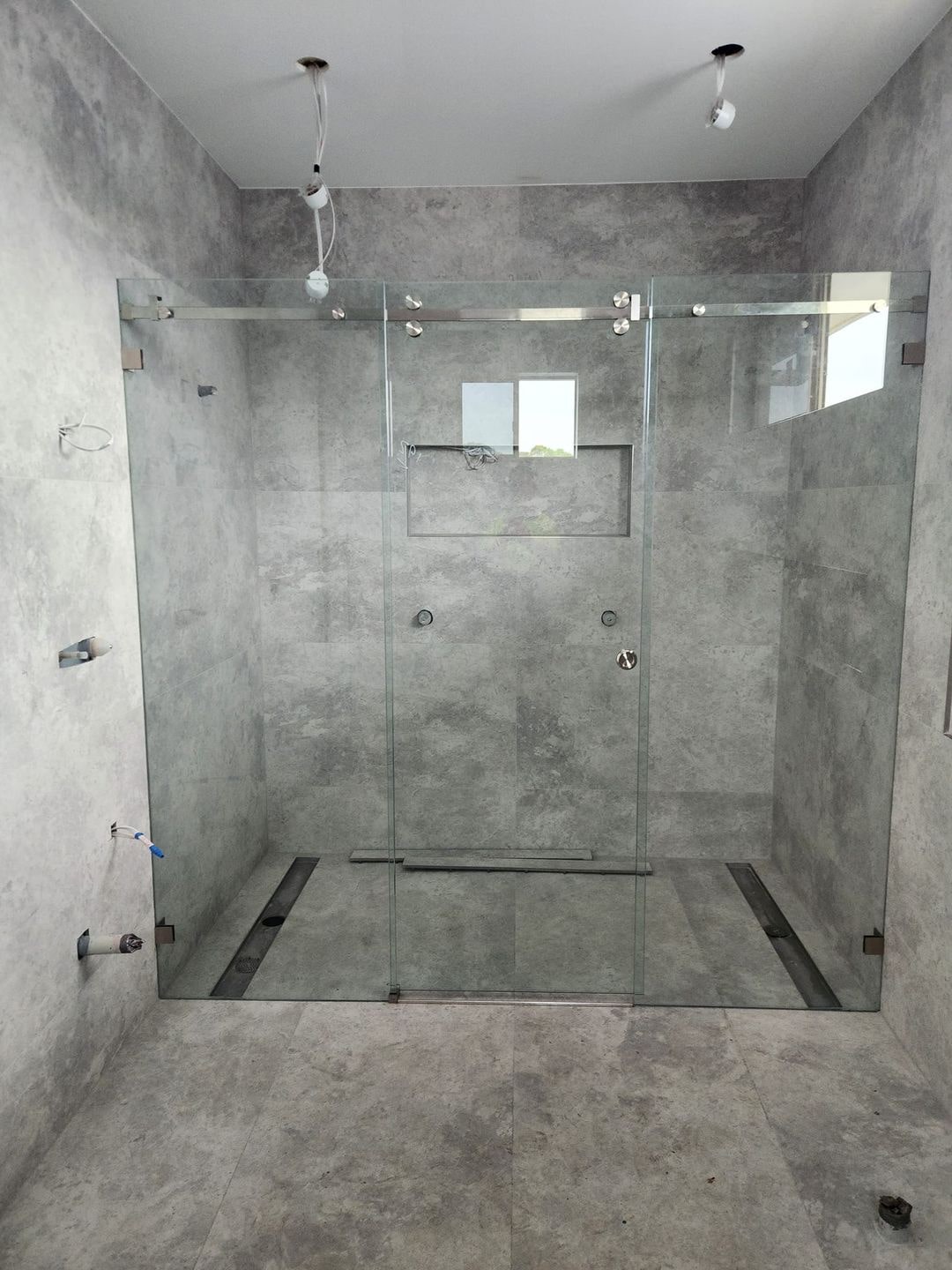
The four types, and when each one wins
Most bathrooms suit more than one option. The right call usually comes down to how much floor space you have, where the water lands, and how much hardware you want to look at.
- Frameless. 10mm toughened panels held by discreet hinges and clamps. The cleanest look, the easiest to keep clean, and the most demanding to install — the glass has to be dead accurate because there's no frame to hide behind.
- Semi-frameless. A slim channel on the fixed panel with a frameless door. Costs less than fully frameless, tolerates slightly out-of-true walls, and still reads as open.
- Framed. A full perimeter frame in your chosen finish. The most watertight and the most forgiving on older, uneven walls. Increasingly chosen on purpose for the black-framed look, not just as a budget option.
- Walk-in and fixed panels. A single sheet with no door at all. Best in small bathrooms where a swinging door would foul the vanity or toilet, and in wet rooms with a properly graded floor.
What actually goes wrong, and how we avoid it
The three failures we get called out to fix are almost always the same, and all three are set at measure stage rather than install day.
- Water escaping at the hinge side. Usually a door hung the wrong way for the floor fall. We check the fall with a level before deciding the swing.
- Doors that drift open or won't hold at 90°. Hinges under-specified for the panel weight. 10mm glass is heavy; the hardware has to be rated for it.
- A silicone bead doing structural work. If the wall is 10mm out of plumb over 2 metres and nobody scribed the glass, silicone ends up filling the gap. We template the opening and cut the panel to the wall.
Specification at a glance
- Glass
- 10mm toughened throughout, Grade A safety glass to AS/NZS 2208. Low-iron (ultra-clear) available where the green tint of standard float glass would show.
- Finishes
- Clear, low-iron, satin/frosted, grey and bronze tint, plus fluted and reeded profiles.
- Hardware
- Polished chrome, brushed nickel, matte black, brushed brass, gunmetal.
- Coatings
- Optional factory-applied protective coating that stops soap scum and hard-water marks bonding to the surface.
- Configurations
- Pivot, sliding, bi-fold, fixed panel, corner, over-bath and full wet-room screens.
- Lead time
- Typically 1–2 weeks from final measure, depending on glass type and hardware availability.
Questions
Shower Screens — the usual questions
Can you install over an existing tiled hob?
Yes. Screens are regularly fitted to hobs, shelves and half-height walls. We check the hob is level and the tiles are sound before we template — a drummy tile under a fixing point is a problem worth finding early.
Do I need to choose hardware before the measure?
No. Bring it up at the measure and we'll show you samples. The finish does affect the hinge type on some frameless configurations, so it's better decided before fabrication than after.
Is a protective coating worth it?
In hard-water areas, yes — it won't stop you cleaning the screen, but it stops mineral deposits etching into the glass permanently. On a rental or a low-use ensuite it's often not worth the extra.
How long is the bathroom out of action?
A standard install is a few hours. Silicone needs about 24 hours to cure fully before the shower is used, so plan on the next day.
Often paired with
-
Mirrors
Bathrooms · Wardrobes · Gyms · Feature walls
-
Splashbacks
Kitchens · Bathrooms · Laundries · Bars
-
Toughened & Laminated Glass
Cut to size · Processed · Certified
Get a firm price, not a guess
Free measure and quote across Sydney. We confirm the glass type, the hardware finish and the lead time in writing before any work starts.